Boots fail in Charlotte for predictable reasons, and most of them are seasonal. Summer thunderstorms soak leather that never fully dries. Winter brings treated sidewalks and parking lots that leave white salt lines across the toes. Spring pollen and red clay mud coat everything, and then the boots go into a closet for months, still dirty, to come out cracked in the fall. None of that requires bad luck. It just requires no routine.
Boot care is not a hobby and it does not need a shelf of products. It needs a few habits matched to the Piedmont year: dry wet boots slowly, clean salt off promptly, condition on a cadence, and store boots clean with their shape supported. Park Road Shoe Service sees the boots that skipped those habits, usually when a crack or a separated sole turns a care problem into a repair bill. The seasons below are the whole program.
Fall and winter: salt, wet, and cold floors
Winter is the working season for most boots and the hardest on leather. Salt draws moisture out of leather and leaves it stiff, and the white crust people ignore is actively drying the hide each time it gets wet and dries again. Wipe salt off with a damp cloth as soon as you see the line form, let the boots dry away from a heat vent, then condition once the leather feels dry rather than on a fixed date.
Wet boots need patience, not heat. A boot soaked in a January rain should be opened up, laces loosened, and left at room temperature with newspaper or cedar trees inside to draw moisture. Radiators, hair dryers, and vents speed the surface while the inside stays damp, and that mismatch is how leather cracks. Twenty-four hours is a normal drying time. A second pair to rotate into is not a luxury in winter; it is how one pair gets time to dry.
Boot care checklist by season
- After any wet wear, remove trees or insoles, loosen laces, and air dry at room temperature for a full day before wearing again.
- Wipe road salt off with a barely damp cloth the same day it appears, then condition when the leather feels dry and stiff.
- Condition smooth leather whenever it looks dull or feels papery, typically a few times across a wearing season, not weekly.
- Brush dirt and dried red clay off before it grinds into seams, using a soft brush after the mud has dried fully.
- Before summer storage, clean the boots, condition them, insert cedar shoe trees, and store them standing in a dry, ventilated spot.
- In the fall, inspect soles, heels, and stitching before the wet season, so repairs happen before water gets in.
Spring and summer: storms, mud, and storage
Spring in Charlotte means pollen film, clay mud, and sudden downpours. Mud should dry on the boot before you touch it. Wet clay smeared with a cloth just works grit deeper into the leather and stitching, while dried mud brushes off cleanly. Suede and nubuck want a suede brush only, never creams or conditioners made for smooth leather, which darken and flatten them.
Summer is storage season for winter boots, and storage is where quiet damage happens. Boots put away dirty keep drying out all summer. Boots stored bent over in a pile take a set at the ankle that never quite leaves. Boots in a sealed plastic bin in a hot garage or attic bake and can grow mildew in Piedmont humidity. Clean, conditioned, treed, and standing upright in the house is the whole prescription, and it takes fifteen minutes in May to save a pair in October.
Conditioning cadence, without the fuss
Conditioner replaces the oils leather loses to water, salt, heat, and time. Too little and the leather dries and cracks across the flex points at the toes. Too much and the leather goes soft, dark, and greasy and stops taking a polish. The boot itself tells you when: dull, light-colored patches at the creases and a dry feel under your thumb mean it is time.
Work in thin coats, let them absorb, and buff off the excess. Dark boots forgive sloppy conditioning. Light-colored leather shows every heavy hand, so test any product inside the heel first. Cedar shoe trees earn their keep between wearings too, holding the shape, smoothing creases, and absorbing the day's moisture and odor. They are the cheapest insurance in this entire guide.

What home care cannot fix
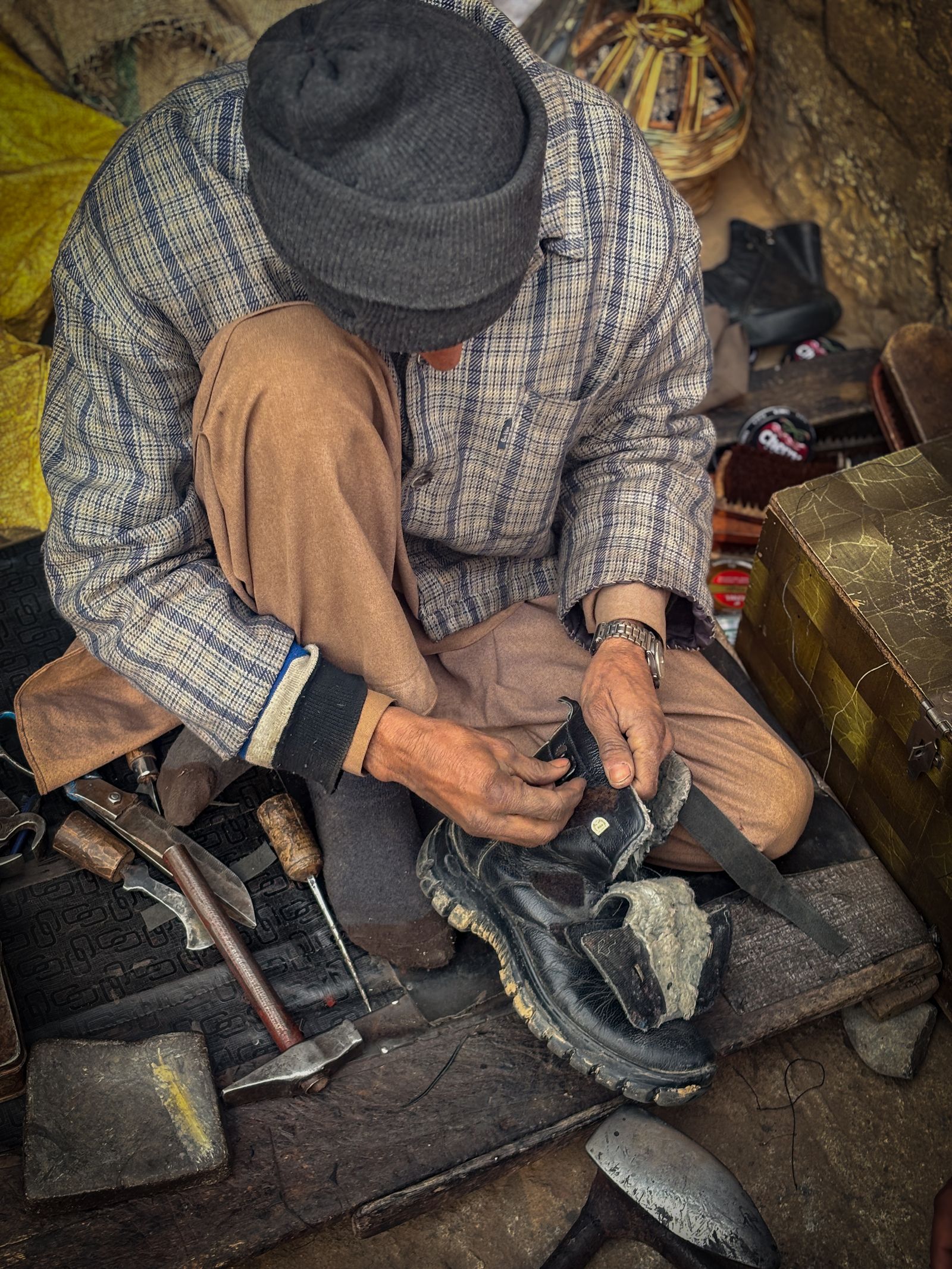
Care prevents damage; it does not reverse it. Leather cracked through at the flex point, soles worn into the midsole, separated welts, broken shanks, and heels ground down to an angle all belong at a repair bench. So does a boot that stays damp and smells sour after proper drying, which can mean the lining or insole has broken down. Bring boots in when you spot these, ideally in the fall before the season that will punish them. A Charlotte shop can tell you honestly whether a boot is a repair, a resole, or a retirement, and that answer is far cheaper in October than in a February rainstorm.
Common questions
How often should I condition leather boots?
When the leather looks dull and feels dry, which for regularly worn boots is a few times a season. Salt exposure and repeated wetting call for conditioning sooner.
Can I dry wet boots with a hair dryer or by a vent?
No. Direct heat dries the surface too fast, causes cracking, and can loosen glued soles. Air dry at room temperature with trees or newspaper inside.
Are cedar trees worth it for boots I wear daily?
Yes. Trees hold the shape, smooth out creases, and pull moisture from the leather between wearings, which matters most for boots worn on back-to-back days.
Photos in this guide are representative stock images.
← All guides from Park Road Shoe Service← Back to Park Road Shoe Service