Look at the back edge of your heels. If the outer corner is ground down at an angle, you are looking at the most ignored and most useful repair in shoe care. The heel cap, also called the top lift, is the thin layer of rubber or leather that meets the ground. It is designed to wear out. Replacing it on time takes a Charlotte shop a short visit and a small outlay in effort. Wearing through it and into the heel itself turns that same job into a rebuild and, on many shoes, the beginning of the end.
This is a practical how-to in two parts: what you can inspect and read yourself at home, and where the professional line sits. Wear patterns are honest information. They tell you how you walk, whether a shoe still fits your stride, and exactly when to bring the pair in.
Read your heels in four steps
- Set the shoes on a flat counter and look from behind. Compare the two heels. Even wear down the center is normal. One side carved away at a steep angle, or one shoe far worse than the other, is a pattern worth noting.
- Check what is left of the cap. The cap is the bottom layer, usually a different color or texture than the heel stack above it. If you can still see a clear layer line all the way around, you are on time. If the wear has crossed that line into the stack, you are late.
- Feel for a slant when you stand. A heel worn to an angle tips the foot with every step. If the shoe rocks toward the worn side on a hard floor, the geometry of your stride has already changed.
- Listen on hard floors. A sharp clicking or a hard, nail-like sound often means the cap is gone and you are striking the heel material or even a nail head. That sound is a deadline, not a quirk.
- Look at the whole sole while you are there. Heel wear and forefoot wear usually progress together. If the sole at the ball is thin or smooth, plan both jobs in one visit to Park Road Shoe Service rather than two.
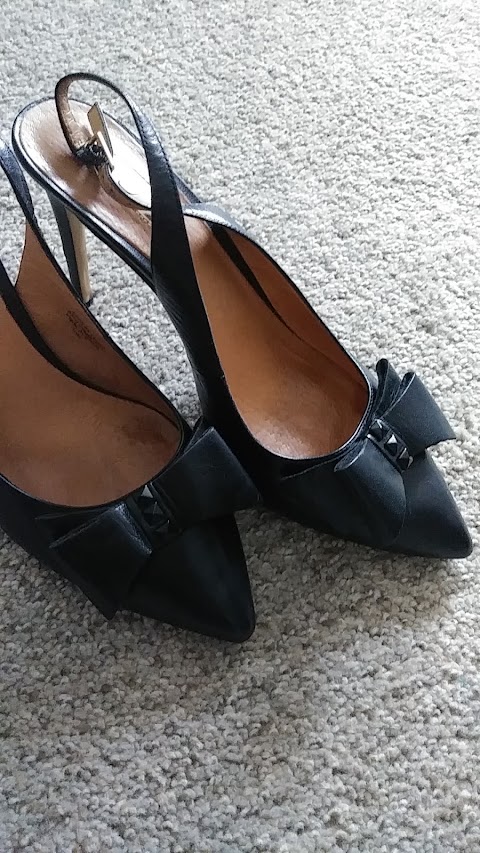
What wear patterns mean
Moderate wear on the outer back edge is the most common pattern and is normal for many walkers; the foot often lands slightly to the outside and rolls inward. Heavy wear on the inner edge, a heel worn flat across the whole back, or dramatically different wear left versus right can reflect fit problems, an old injury, or gait habits. A cobbler is not a doctor and will not diagnose your stride, but the pattern is worth mentioning at the counter, because heel shape and replacement material can be adjusted modestly for wear rate, and severe or painful patterns deserve a conversation with a clinician rather than a craft fix.
Heel taps, small protective plates set into the cap, suit people who burn through one corner fast. They slow the wear at exactly the spot you destroy, and they are far cheaper to replace than caps worn into the stack. If you have killed heels quickly your whole life, ask about taps when the new caps go on.
The professional repair, and why timing rules it
Replacing a heel cap is bench work: the old cap is removed, the heel base is leveled, a new cap is fitted, shaped to the heel, and finished so the edge matches. On time, that is the entire job. Late, the cobbler must first rebuild the worn-away angle of the heel stack itself, sometimes in layers, before a cap can go on. Later still, the wear reaches the upper or the shank area, and the shoe may not be worth saving at all.
The damage is not only to the shoe. Walking on slanted heels changes how force travels through your ankles and knees, and it shows up as end-of-day aches people blame on everything except the obvious angled block under their heel. Dress shoes with leather heels, heeled boots, and women's heels with slim caps all wear faster than chunky rubber heels, and slim caps have the least material to spare. Check them monthly in season, the way you would check tire tread.

The home boundary
At home you can inspect, rotate pairs so wear spreads across your week, keep a second pair of caps' worth of attention on slim heels, and use stick-on protective pads as a short bridge to a proper appointment. You cannot level a heel, bond a cap that will survive Charlotte sidewalks, or rebuild a worn stack with hardware-store parts; those fixes fail in days and can tear the heel when they go.
Bring the pair in when the layer line disappears, the shoe clicks, or the slant is visible from behind. That is the whole system. A small repair done on time, repeated over a shoe's life, is most of why one pair lasts a decade and another lasts a year.
Common questions
How long do heel caps usually last?
It varies with your stride, weight, surfaces, and how often you wear the pair. Slim dress heels may need caps yearly in regular wear; chunky rubber heels last much longer.
One heel wears much faster than the other. Is that normal?
Mild differences are common. A large difference is worth flagging at the shop, and if you also have pain on that side, it is worth raising with a clinician.
Can worn heels be fixed on boots too?
Yes. Work boots, western boots, and heeled fashion boots all take replacement caps, and boots are often easier to rebuild than slim dress heels if you arrive late.
Photos in this guide are representative stock images.
← All guides from Park Road Shoe Service← Back to Park Road Shoe Service